
What Goes Into a Safe Lift Installation
The Hidden Work Behind a Safe Lift Installation

A lift is one of the few systems in a building that people trust instinctively, often without seeing the level of planning behind it. Whether it is part of a new build or a refurbishment, a safe home lift installation is shaped by deliberate planning and disciplined execution throughout the project. Lift safety is deliberately built into the process through structured risk assessment and controlled site execution.
This blog post takes a closer look at what goes into a safe lift installation by explaining the stages that shape how each project is delivered. It explains how safety is embedded across the delivery process, linking planning decisions with on-site execution and testing. As a lift company Singapore property owners and managers rely on, we believe that transparency around these processes provides a clear understanding of what responsible lift safety involves in practice.
Getting It Right Before Installation Even Begins

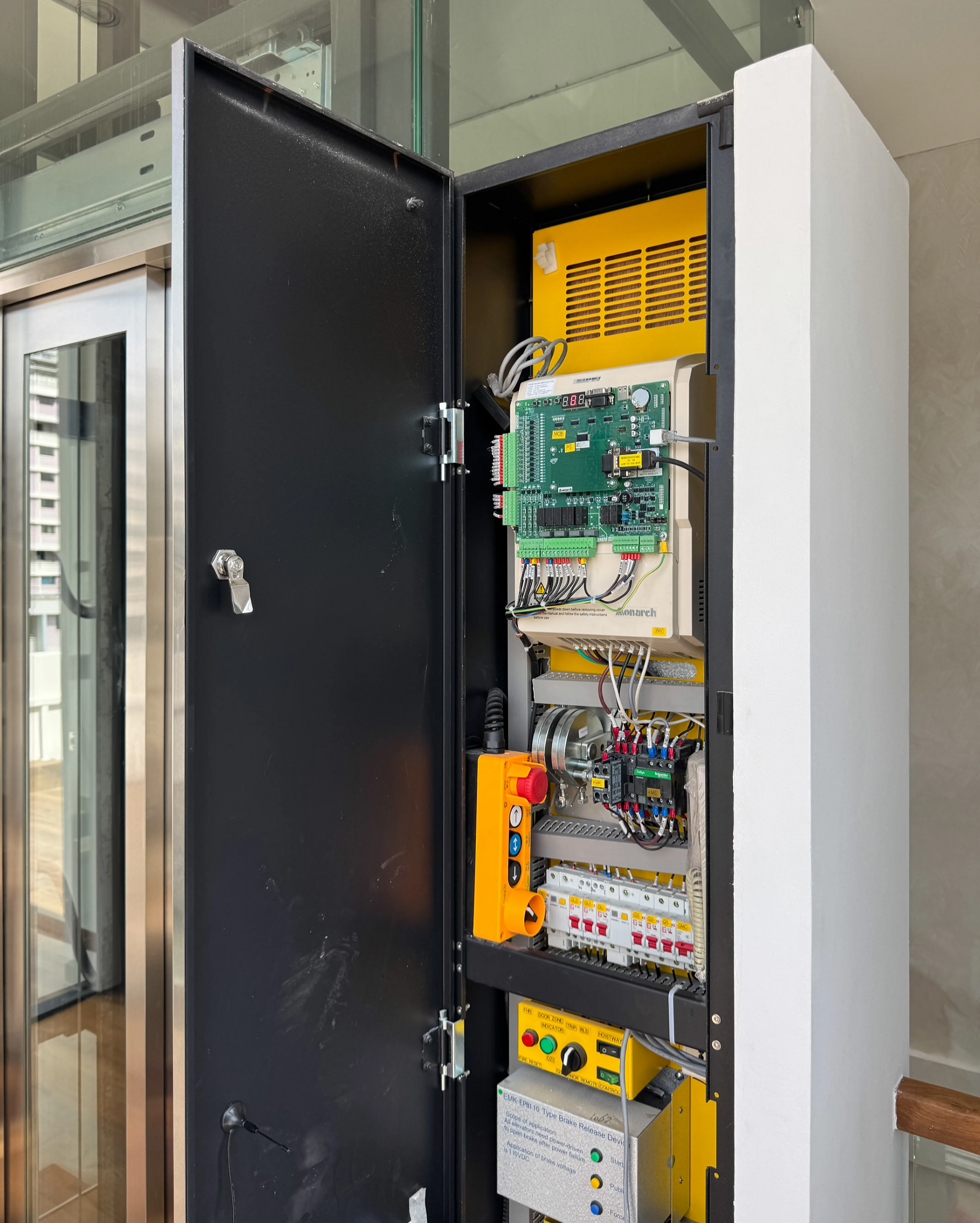
Long before any equipment arrives on site, we begin with a formal risk assessment and site evaluation. These early decisions shape how smoothly the project runs and how well risks are controlled throughout the installation.
We approach this by breaking the installation down into defined stages such as delivery, lifting operations, pit works, mechanical assembly, electrical installation, and testing.
Our structured risk assessment occurs at every stage and is tailored to the site conditions we encounter at each project. This means we are already thinking about fall prevention, dropped-object risks, ventilation in confined spaces before work begins. This approach also ensures compliance with building lift regulations in Singapore from the outset, such as Singapore Standard (SS) 550 standards, and Building and Construction Authority (BCA) expectations.
What to Expect During a Lift Installation


For homeowners, a lift installation should feel organised and predictable on site. While much of the technical work happens behind the scenes, there are clear safety fundamentals that should always be in place. As a general guide, a properly managed installation will include the following.
Before installation work begins on site
A clear installation plan that follows project-specific Safe Work Procedures
Defined access controls around the lift shaft and pit to prevent unauthorised entry
During mechanical installation
Confirmed safe access into the lift shaft and pit, with lighting and ventilation in place
Ongoing supervision by trained lift technician teams to ensure work follows the agreed plan
During electrical installation
Power isolation confirmed before wiring works begin
Electrical systems energised only after checks are completed
Progressive functional checks carried out as installation advances
This staged approach is applied consistently across residential and commercial lift projects, allowing issues to be identified and addressed early in the process. This translates into fewer surprises and confidence that the lift has been installed carefully.
Safety Doesn’t End At Installation Day

Before any lift is approved for use, a full lift testing and safety inspection is carried out to confirm system performance meets required standards. As a baseline, our technicians verify that:
Static and dynamic load tests meet rated capacity requirements (i.e. the lift can hold still and move between floors safely at the maximum weight limit)
Emergency systems activate and reset correctly
Lift travel remains stable during load operation
System responses remain consistent across repeated test cycles
Only afterwards is the lift handed over once compliance with building lift regulations has been confirmed and all inspection records and safety documentation are in order. This provides clarity for future inspections and establishes a clear reference for ongoing performance.
Beyond handover, planned elevator maintenance sustains safety over time by ensuring that components subject to wear continue to operate as expected. Maintenance schedules are informed by the original installation standards and test results, creating continuity between how the lift was installed and how it performs throughout its service life.
A safe lift installation requires consistency across planning, installation, testing, and maintenance. When safety decisions from planning carry through to execution and servicing, standards remain clear throughout the project.
At BELIFT, we plan every lift installation with future inspections and daily use in mind, ensuring our installation methods match what will be tested later, and we develop detailed projections that show how the lift should perform.
This approach allows us to remain accountable for installation quality and how the lift operates throughout its service life. If you are looking for a lift company Singapore partners trust to think ahead, manage risk, and deliver lasting outcomes, we are ready to bring that same approach to your next project.


.png)

Comments