
How We Verify the Lifelines Hidden Inside Your Mobility Systems
Hidden Lifelines Behind Singapore’s 79,000 Active Lifts

When we step into a lift, our eyes are drawn to the cabin design and responsive digital display, if they’re not already on the screens of our devices. We rarely consider that this cabin is just the face of one of the 79,000 active lift systems stretching across Singapore. Behind the daily convenience of these moving spaces sits a heavy legal and operational framework that safeguards every single vertical trip. Behind the shaft walls lies a network of electrical and mechanical safeguards engineered to ensure passenger safety during an unexpected stoppage.
Below, we break down how these hidden safety lifelines currently function under strict regulatory codes, while outlining the next generation of emergency response we are actively working towards, where live diagnostic data will coordinate seamlessly with our physical dispatch network to manage a breakdown.
Why a Working Lift Intercom Is Your First Line of Defence
When a lift car stops unexpectedly between floors, the only feature that matters is the emergency telephone button. Historically, early mechanical car alarms and bells rang into open wells to alert nearby attendants. As buildings grew taller and automated systems replaced lift operators, these unmonitored alarms evolved into hardwired intercom networks.
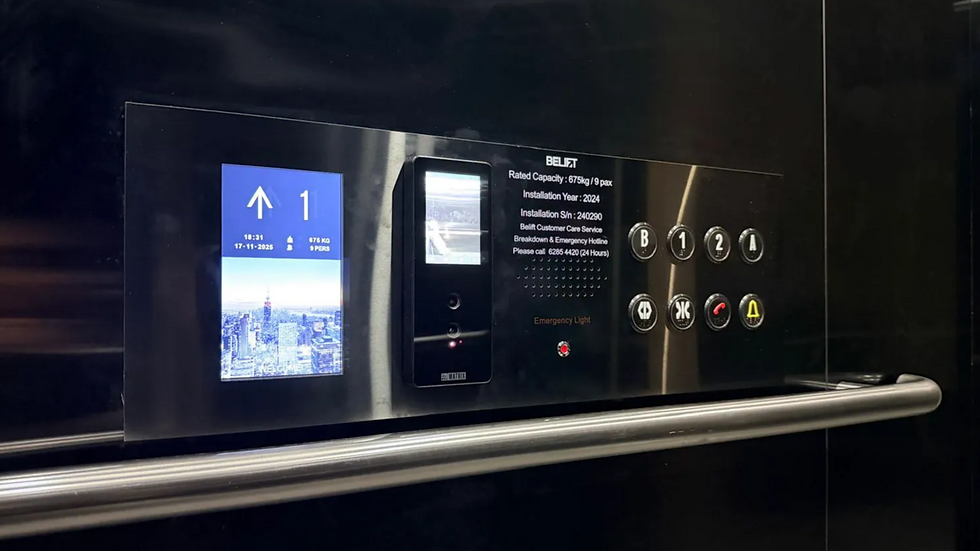
Under BCA Lift Regulations, this infrastructure must function as a reliable, continuous two-way voice channel so trapped occupants know their signal has been received. BELIFT verifies both the audio trigger and two-way clarity during routine testing. Keeping the voice channel functional ensures trapped passengers can instantly alert the response team when they need help, especially when a main power failure disconnects lift systems from the electrical grid.
Ensuring Emergency Power Under SS 550 Lift Compliance


During main electricity failures, the entire system relies on secondary backup power sources. Under the SS 550:2020 Singapore Standard, a lift must have an independent backup system, usually consisting of emergency batteries and an Automatic Rescue Device (ARD). When a blackout occurs, the ARD automatically supplies power to the lift motor and brakes to move the stranded car to the nearest floor and open the doors for a safe exit.
To ensure these systems work when needed, we cut off the main power supply during routine maintenance as a controlled test. Our technicians confirm that the backup batteries activate immediately, keeping the lift moving and the emergency cabin light operational. This power-drop test confirms passengers will not be left trapped in darkness, delivering the electrical safety outcomes needed to handle a non-complex breakdown.
Engineering the Next Generation of Emergency Lift Response
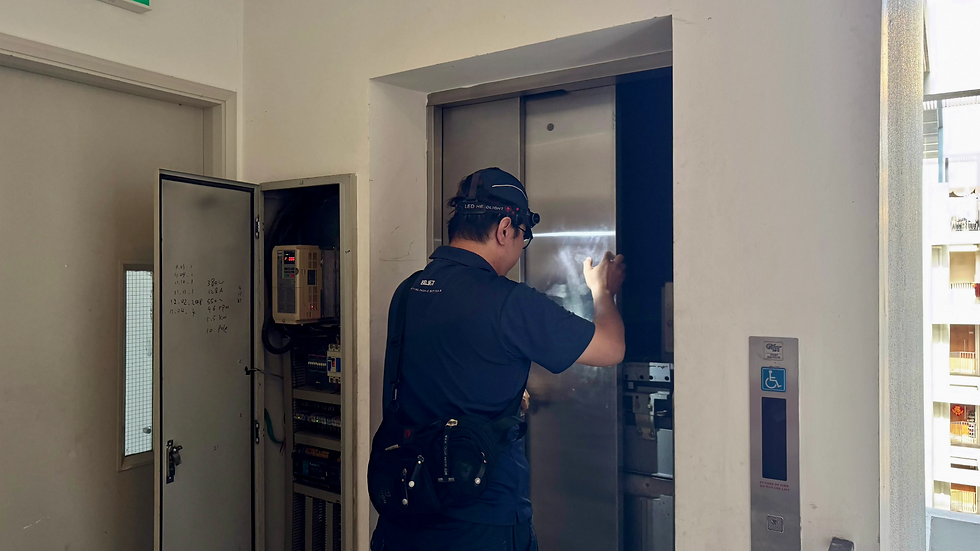
When a more complex mechanical breakdown leaves a car stuck despite active backup power, hardware readiness must connect with real-world coordination. Automated alerts feed directly into BELIFT’s 24/7 emergency dispatch network. In the near future, this system will push real-time diagnostic data directly to our technicians' mobile units while they are in transit. This upcoming capability will inform the responding team of the exact nature of the fault before arrival, entirely eliminating guesswork the moment they reach the property.
Resolving an issue safely requires close coordination between control room staff and field personnel, as outlined in our Emergency Response Plan (ERP). As we roll out these emergency notification system upgrades, an automated communication protocol will instantly notify building management the moment an incident is detected.
On-site, this integrated technical data will empower our technicians to execute safety protocols and passenger extraction procedures with unprecedented speed, further protecting long-term building operations.
Ensuring lift safety is a straightforward process when managed with foresight. By integrating regulatory checks into routine maintenance, we verify that emergency intercoms function and backup power systems respond before a breakdown occurs. We perform these mandatory technical inspections and adhere strictly to emergency response timelines, supporting the long-term reliability of a building's vertical mobility.
Our track record with residential and commercial properties is proof that even with complex BCA regulations, it is possible to deliver compliance with speed and care. We are ready to provide this same level of expertise for partners and homeowners who value the difference a safe, well-maintained building makes.


.png)

Comments